- In January (2025), I was on an NIH study section that got cancelled as the new administration shook up HHS/CDC/NIH and did some mass grant cancellations. It eventually got rescheduled but I wasn’t able to attend — I can only assume it was as hectic as one would imagine.
- Then in April, I was excited to start working on my second NASEM consensus committee. It got abruptly cancelled by the CDC the morning of our first meeting. This was, notably, after the whole committee was flown in from across the country the night before so couldn’t possibly have been a cost saving measure. We were never given a reason for the cancellation but I can only assume genetic blood disorders are woke.
- Then in October, I was on another NIH study section that got cancelled — this time due to the government shutdown. It’s scheduled for later this month, but as a result of the condensed timeline, we’re reviewing ~40% fewer grants than we would normally discuss in study section.
This year has just started but it’s not shaping up to be any better professionally or personally.
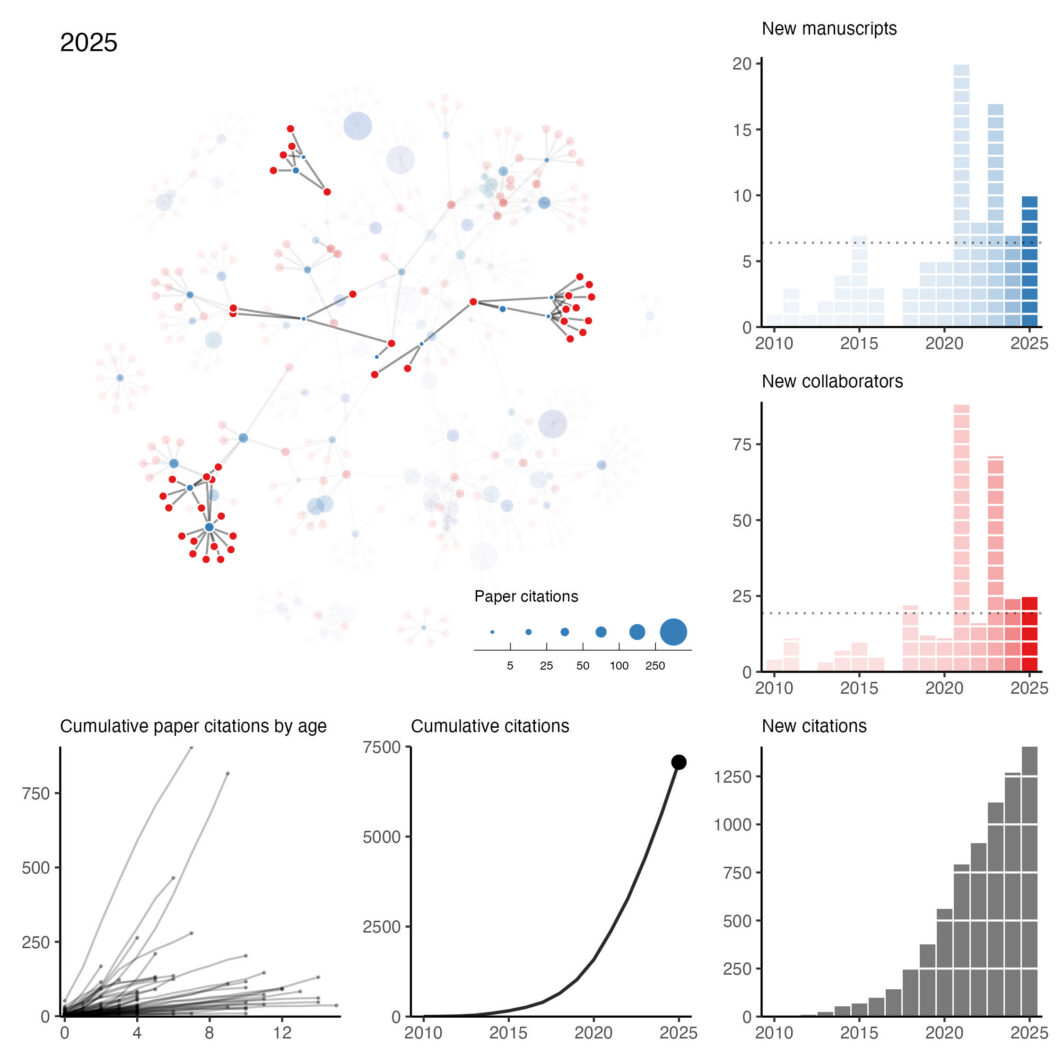
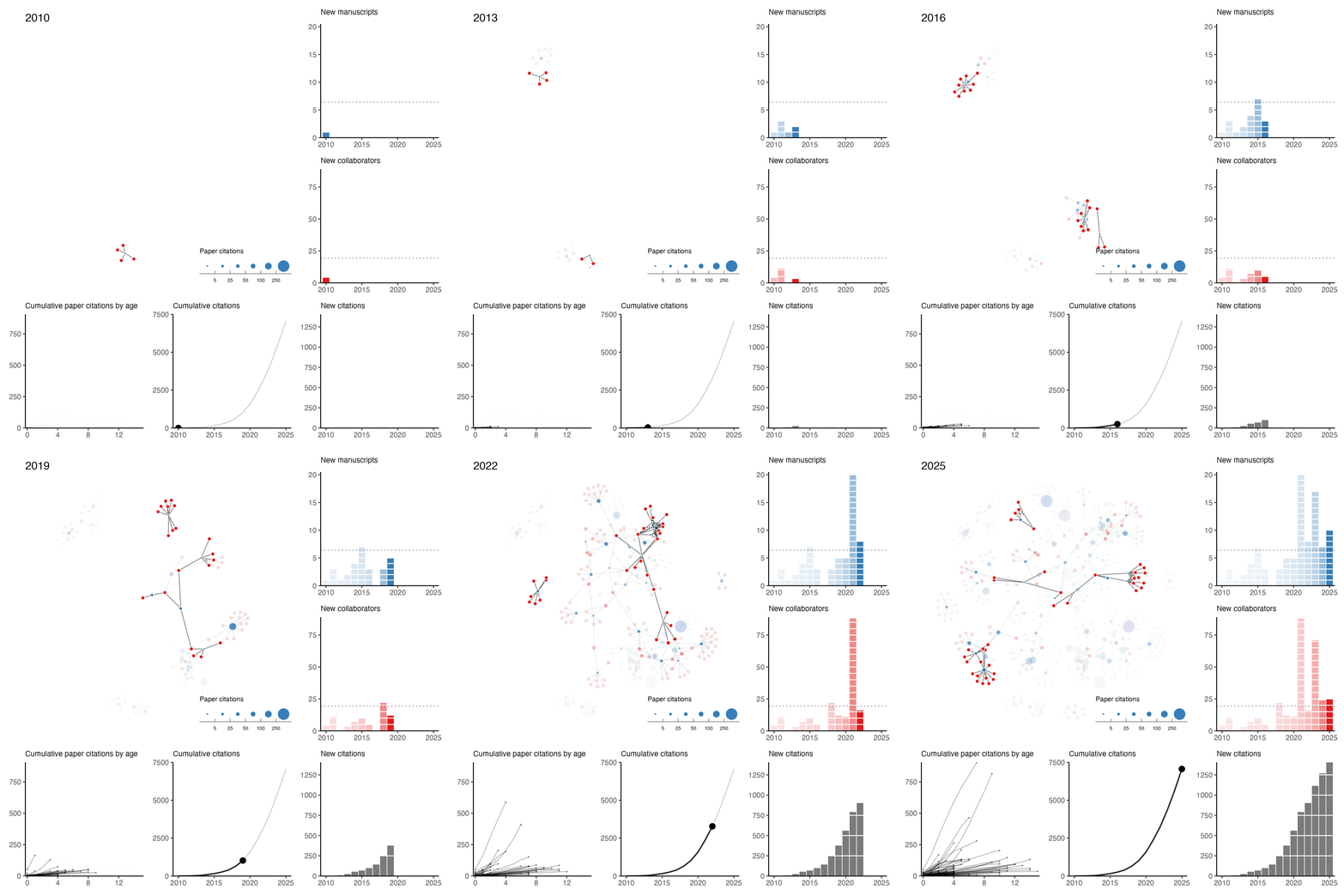
Per tradition, here’s a quick look at the evolution of my collaboration network since 2010.
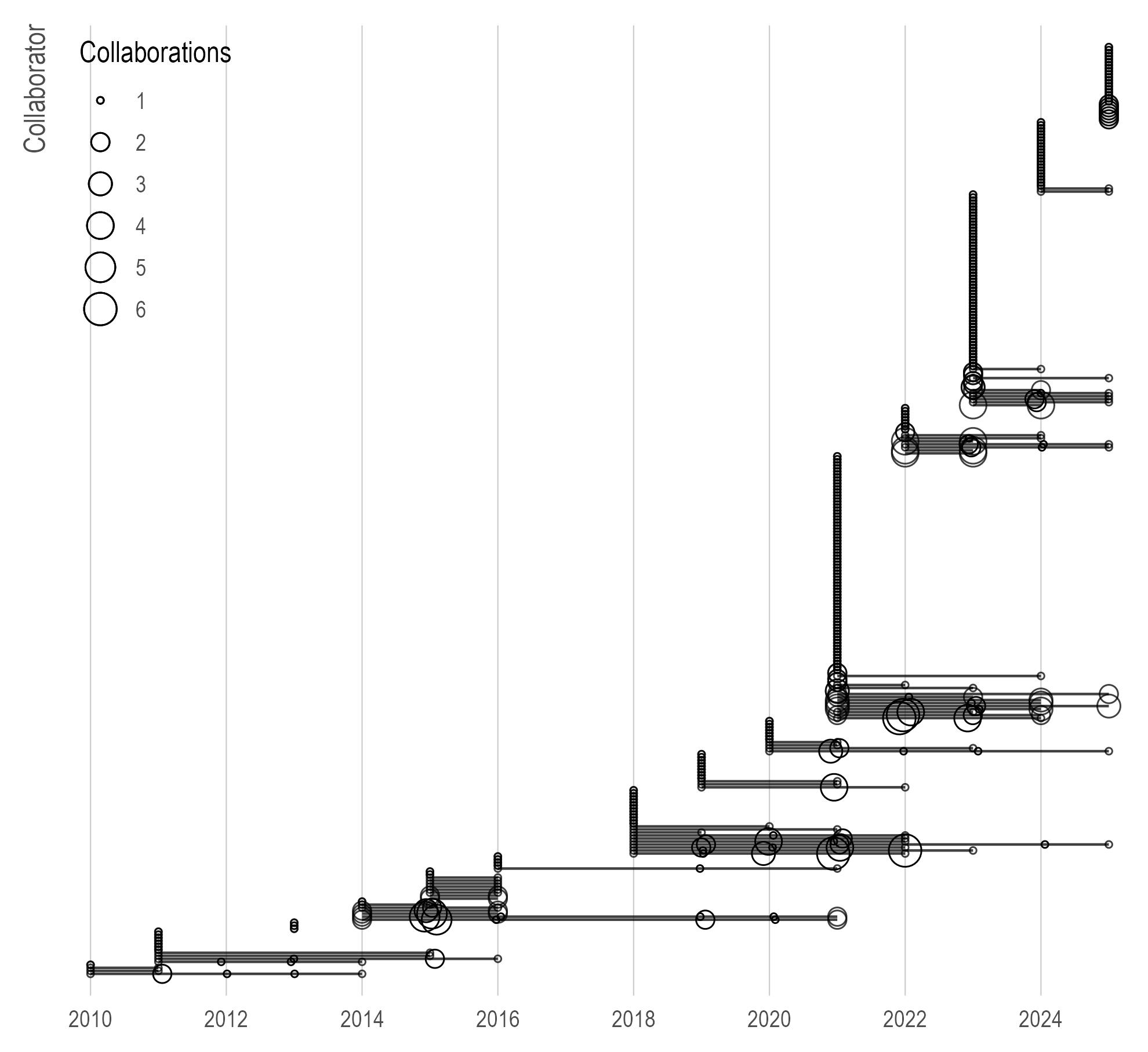
Below is a plot of collaborations (circles) over time (x-axis) by collaborator (y-axis).
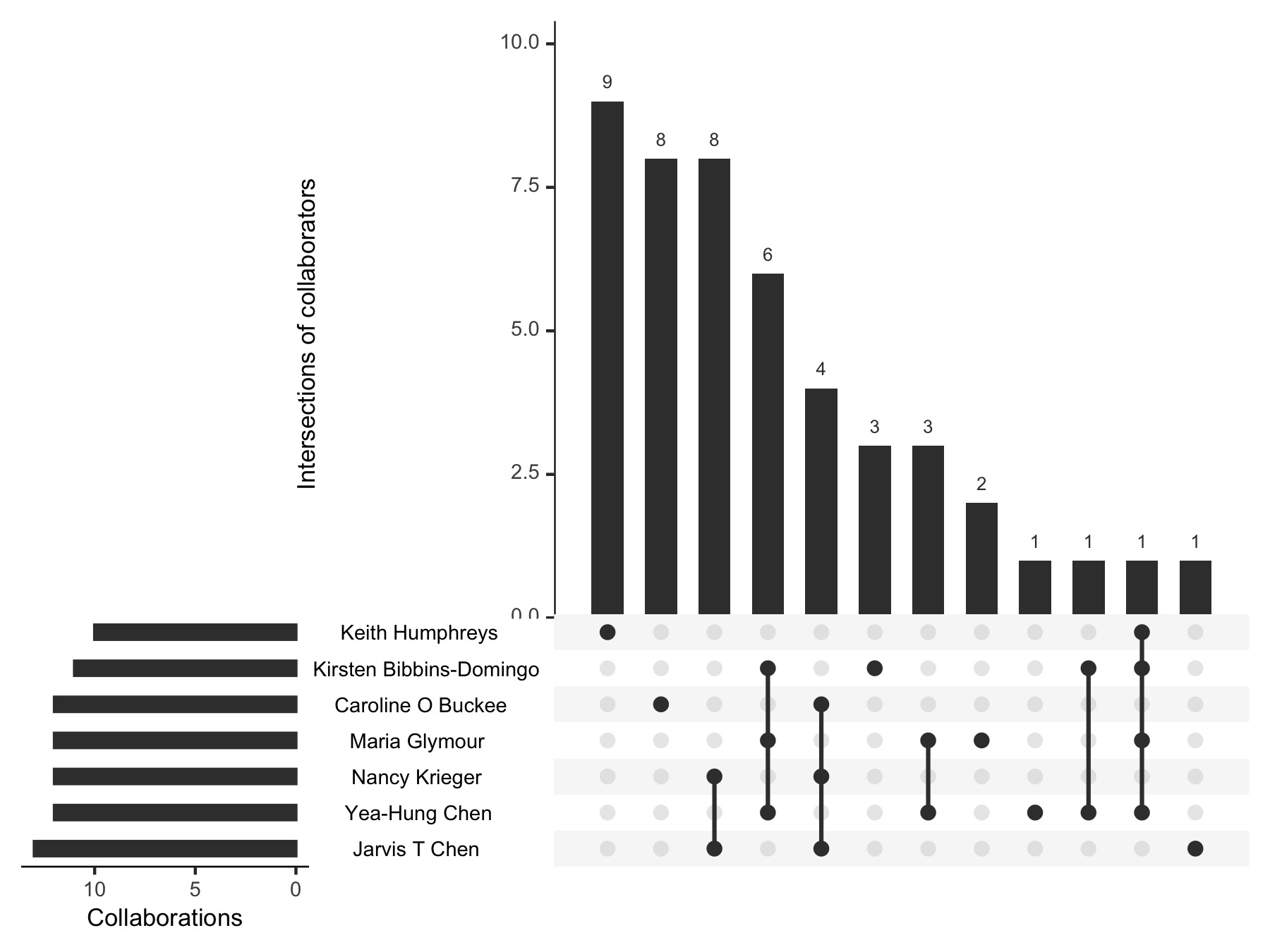
Here’s an upset plot of my most frequent collaborators (in terms of number of papers) and their different sets. It hasn’t changed all that much — still mostly comprised of people I no longer collaborate with but when we did, we were quite productive.
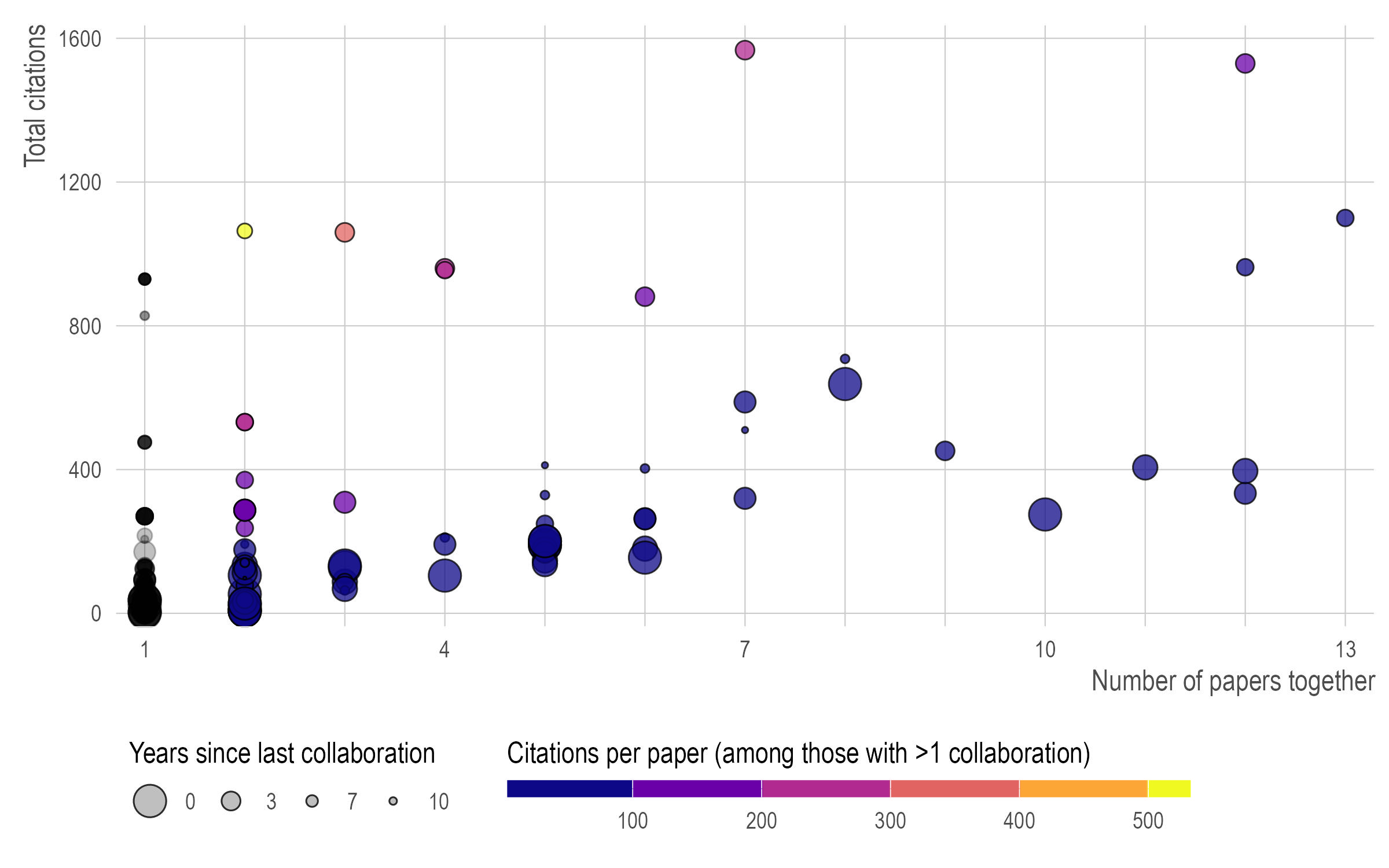
Conditional on having more than one collaboration together, who are my “most efficient” collaborators in terms of average number of citations (per collaboration)?